
Talk to a specialist
A 30 minute conversation with a specialist can show where predictive modeling and AI realistically fit into your formulation process, and where they don't, yet.
"AI" is everywhere right now. It's on software feature lists, in vendor pitches, in conference keynotes, and increasingly, on tools that have nothing to do with artificial intelligence at all. A trend line on a dashboard gets called AI. A pivot table with a nicer interface gets called AI. Somewhere along the way, the word stopped meaning something specific and started meaning "advanced" or "modern."
That's a problem. Not because AI isn't useful, but because the label has become disconnected from what the technology actually does. And in an industry like pet food, where formulation accuracy affects production costs, product quality, and animal health, that disconnect has real consequences.

People routinely use "data analysis," "predictive analytics," and "artificial intelligence" as if they're interchangeable. They're not. Each one describes a different kind of capability, built for a different kind of problem, and each comes with a different bar for validation before you can trust its output.
Data analysis is computation on structured data you already have. No prediction, no learning. Just organizing, comparing, and surfacing what's already in your dataset. Comparing a formulation portfolio to find merge candidates is data analysis. Statistical summaries, pattern matching, and trend reporting all fall into this category, no matter how sophisticated the tool doing the work looks.
Predictive analytics takes known inputs and predicts an outcome. Predicting finished moisture from line settings, ingredient composition, and processing conditions is predictive analytics. It draws on statistical or machine learning methods, but the relationship between inputs and outputs is well-defined enough that it can be validated and run reliably at production scale.
Artificial intelligence is a system that learns from data and generates new outputs, not just a prediction from known inputs, but something closer to synthesis. A model that suggests a starting formulation based on patterns learned from past formulations is AI. It's also the hardest of the three to get to production-grade accuracy, because formulation involves far more variables, constraints, and judgment calls than a single predicted value.
These aren't academic categories. They set expectations. If a tool is described as AI, people expect it to reason, adapt, and generate. And they should validate it accordingly, with scrutiny proportional to that claim. If a tool is actually doing data analysis, dressing it up as AI creates expectations, the tool was never built to meet, and it lets a straightforward calculation skip the validation it deserves just as much as a learning system does.
In most industries, that mismatch is an inconvenience. In pet food formulation, it's a business risk.
Formulation decisions in pet food aren't abstract. They determine what actually goes into production, what a finished product's nutritional and quality profile looks like, and (because pets can't tell you when a formulation is off) whether the food genuinely delivers what it's supposed to. Layer on ingredient cost volatility and tight margins, and a formulation tool that overpromises isn't just misleading marketing. It's a decision made on a foundation that hasn't been validated for what it's actually doing.
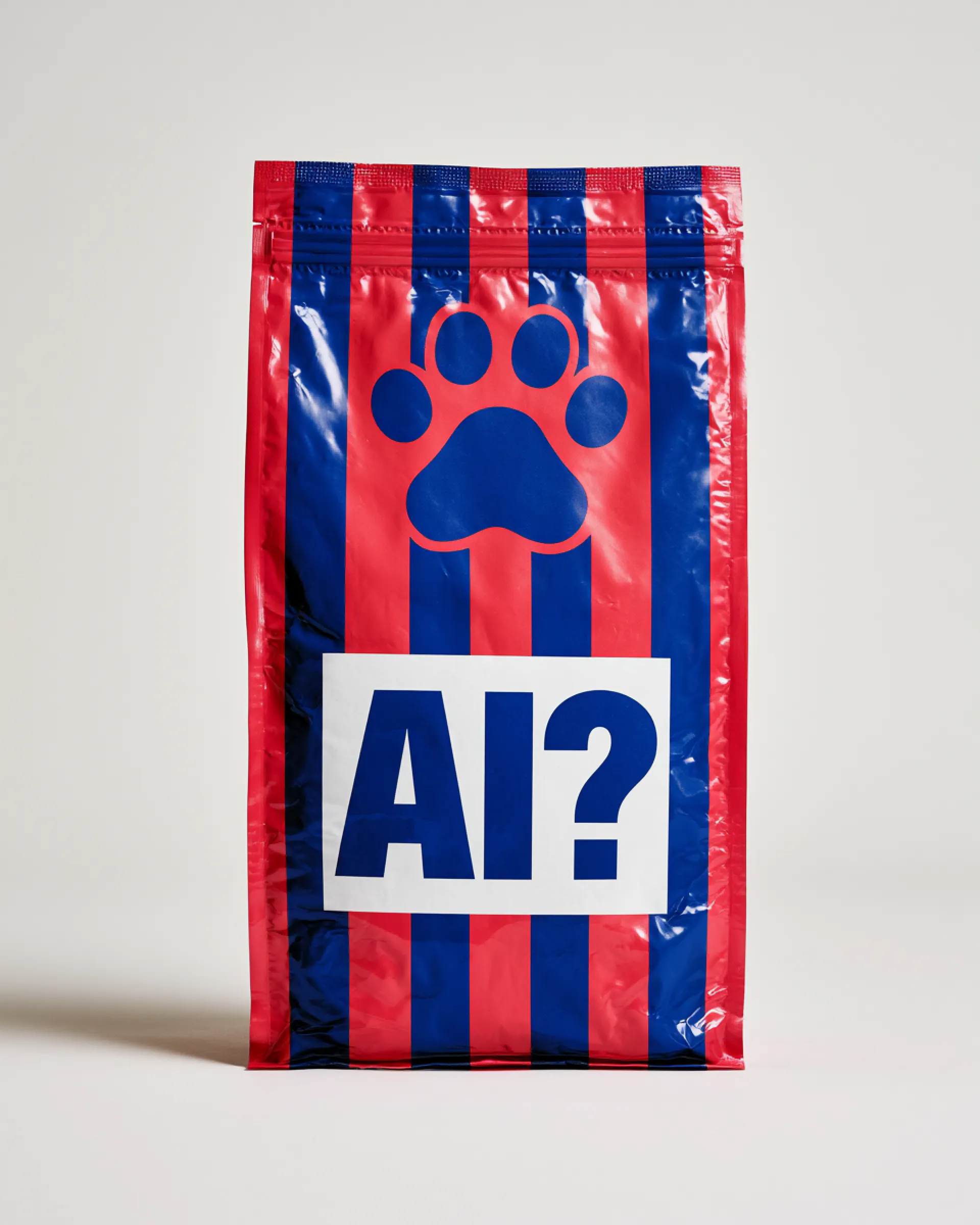
That's precisely why the label on a tool matters less than what's behind it. A formulator relying on a model to predict finished moisture needs to know whether that model has been validated against production data at scale, not whether the vendor calls it AI. A generative formulation suggestion needs a different, more rigorous kind of scrutiny before it goes anywhere near a production line, because it's proposing something new rather than estimating a known relationship.
The practical takeaway is simple: don't evaluate a tool by its label. Evaluate it by its evidence.
Ask what the technology has been validated against. Ask whether it's been tested on production data or only on a proof of concept. Ask what accuracy looks like at the scale you operate at: not in a demo, but on your lines, with your ingredients, under your conditions. A proof of concept and a production-ready system are two very different things, and the gap between them is exactly where validation needs to happen.
None of this means AI is the wrong goal. It means AI is not automatically better simply because it's AI. The right question is never "is this AI?" It's whether the technology fits the problem, whether it performs reliably, and whether you can trust the results enough to act on them.
BESTMIX uses these three terms deliberately, because the industry doesn't. A comparison tool is called "analysis" here, even when a comparable feature elsewhere gets marketed as AI. A prediction is called "predictive analytics" when that's what it is: a claim that can be validated and stood behind. "AI" is reserved for systems that actually learn from data and generate new outputs. Getting AI to production-grade accuracy in formulation is a hard problem, and it gets treated as one rather than shortcut.
That precision isn't about caution for its own sake. It shows exactly what kind of technology is behind a result, and what level of scrutiny it deserves, before it shapes a production decision.
Underneath all three categories, the goal is the same: technology that makes meaningful use of your own data. For us, that means closing the loop between formulation and production: feeding real production results back into the formulation process, so what's learned from one run genuinely improves the next.
A 30 minute conversation with a specialist can show where predictive modeling and AI realistically fit into your formulation process, and where they don't, yet.
Feel free to contact us directly and let's see how we can help you with YOUR story!


Personalisation
See the current personalisation segmentation scoring or apply a manual segmentation to test