
BESTMIX® Recipe Management
Create and optimize pet food formulations while balancing nutrition, quality and cost.
Turn quality data into decisions that improve formulation and finished product consistency. BESTMIX® Quality Control connects NIR, laboratory and production data in one platform, helping you centralize quality data, automate testing workflows, detect deviations and manage raw material variability. Keep formulations based on current ingredient data while ensuring product safety, quality, compliance and traceability from raw material intake to finished pet food.
















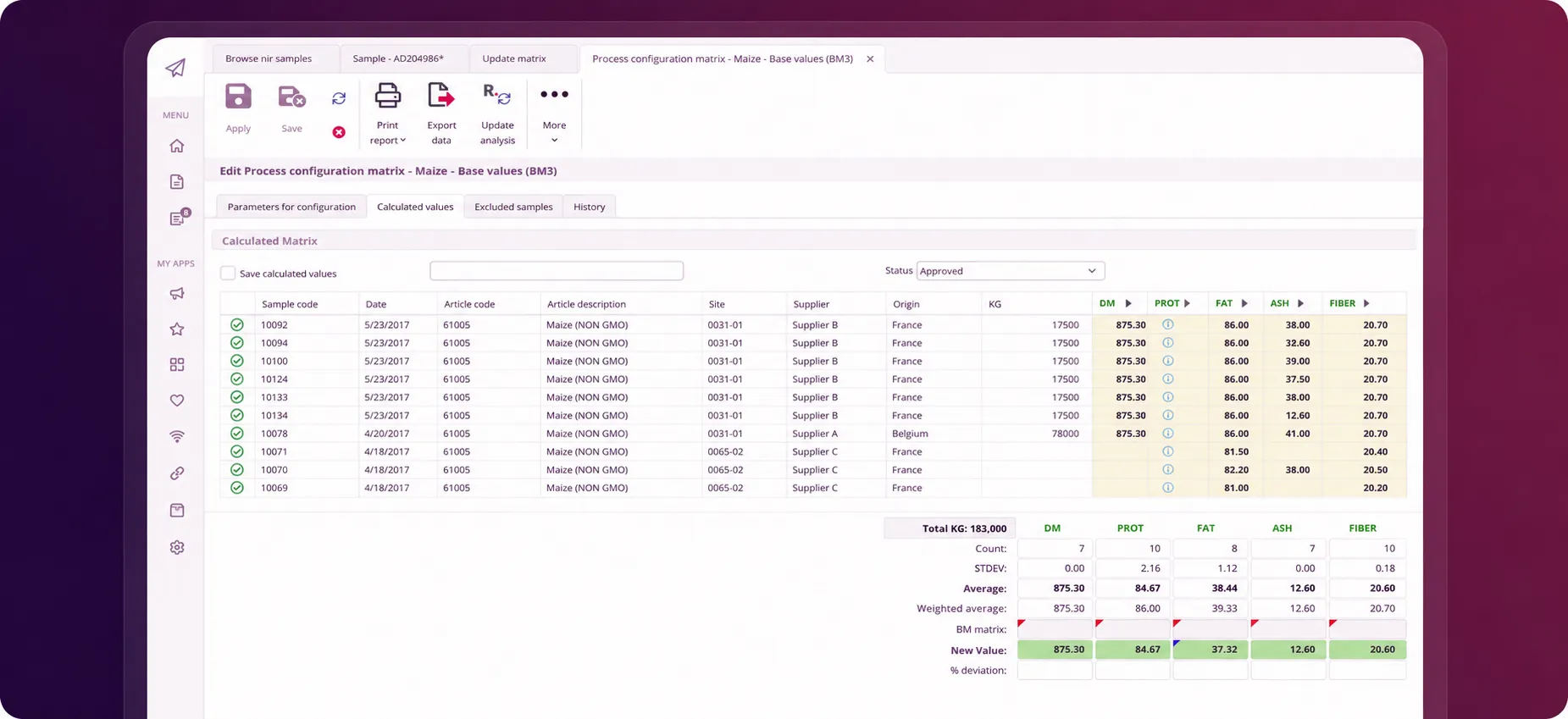
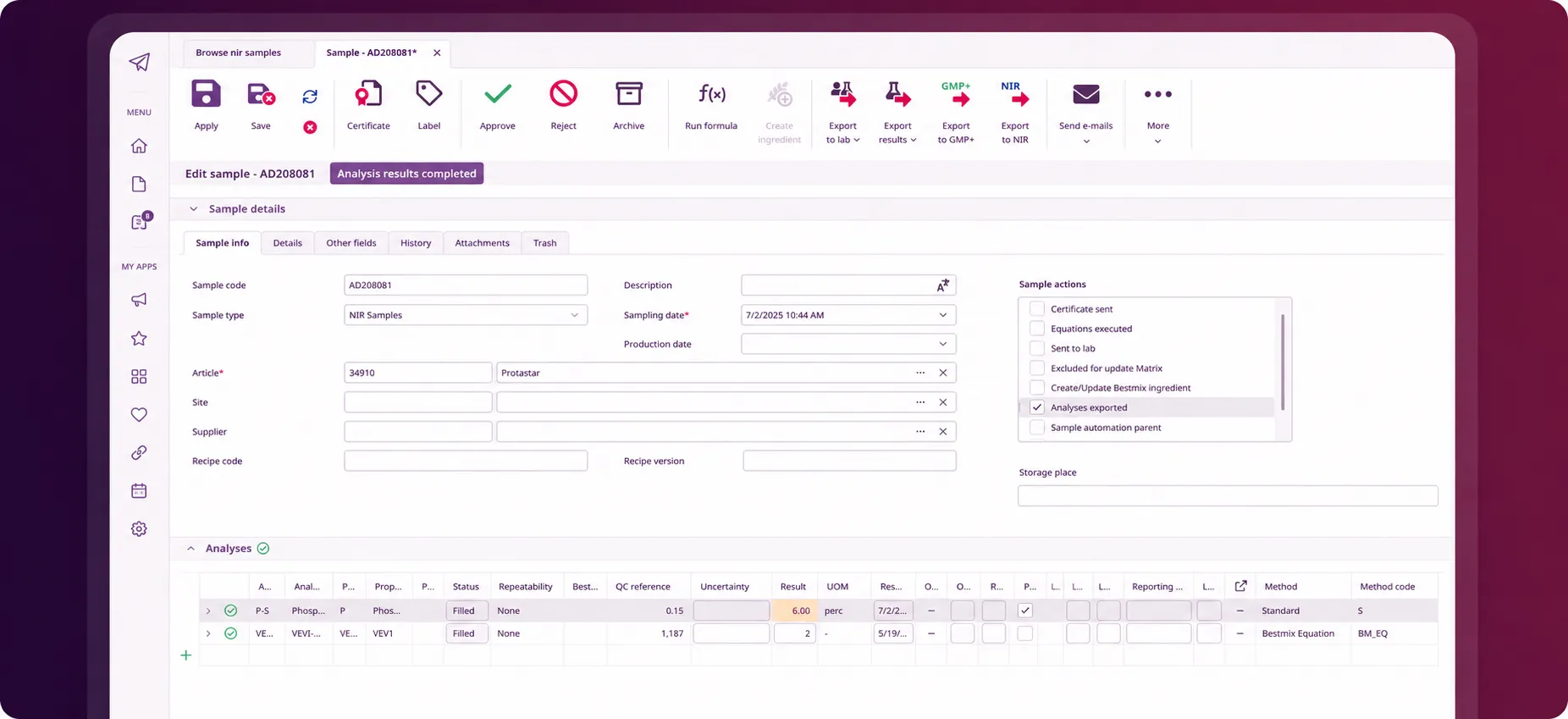
Centralize data from lab instruments, external laboratories and production systems in one platform. Eliminate spreadsheets and ensure every team works with accurate, consistent information.
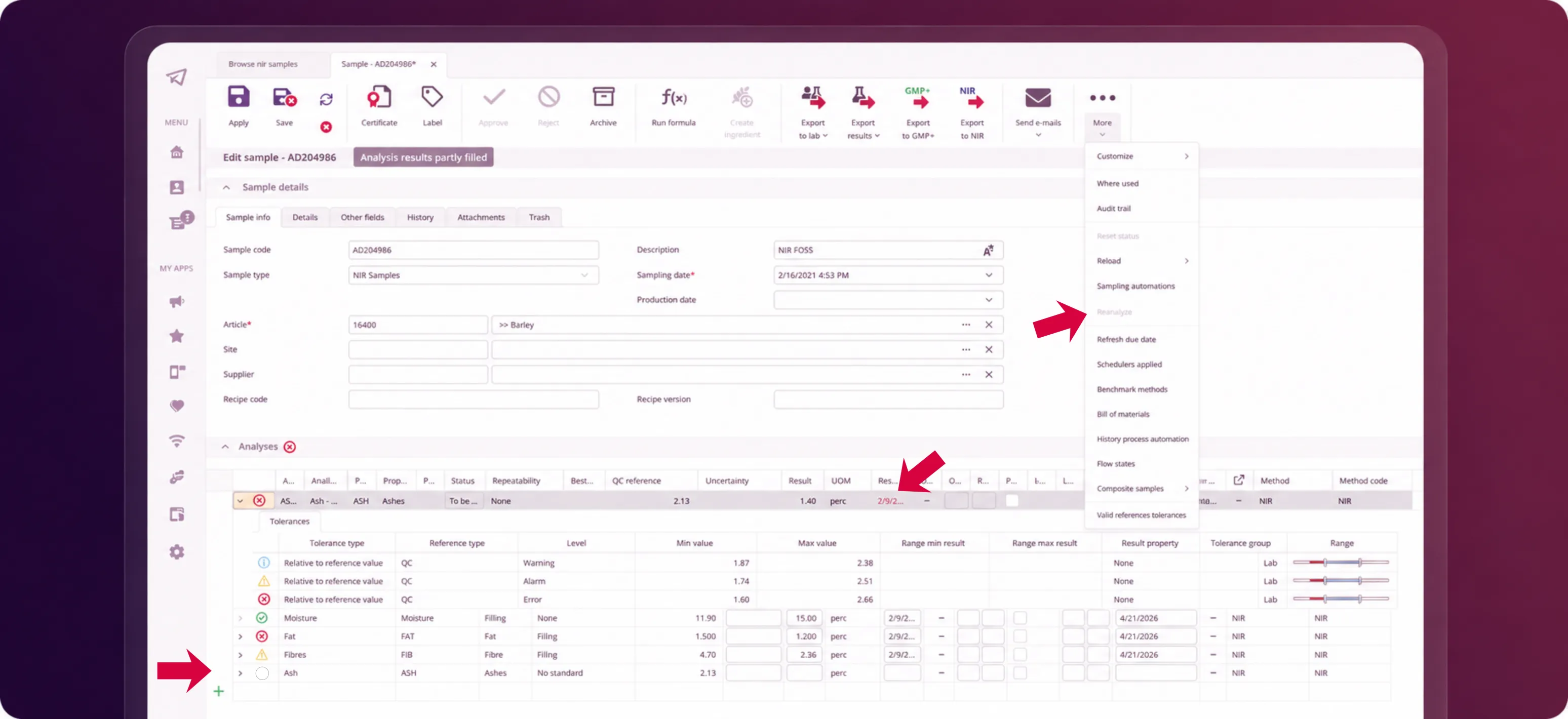
Automatically compare results with predefined standards and receive alerts when values are out of spec. Respond faster to prevent quality issues and protect product safety.
Analyze trends, benchmark suppliers and monitor raw material variability. Use actual quality data to improve ingredient selection, reduce variability and support more accurate formulations.
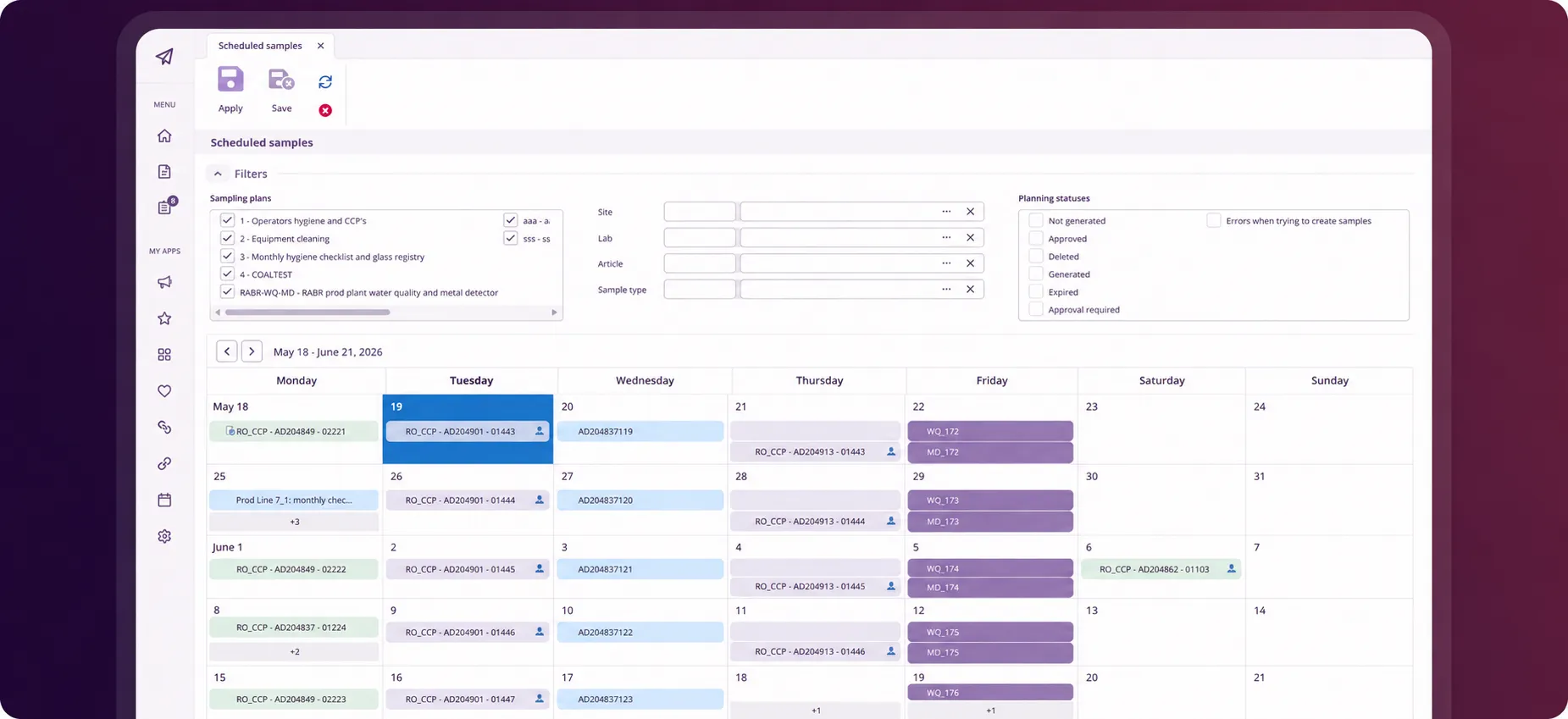
Track quality from raw material intake to finished products. Maintain control over processes, meet regulatory requirements, and provide complete traceability when it matters most.
Create and optimize pet food formulations while balancing nutrition, quality and cost.

A predictive model built on your production data. Proven in production, run as a proof of concept on your line.
connected NIR instruments
lab integrations
years of expertise and innovation
Find quick answers to the most common questions about BESTMIX® Quality Control
Yes. BESTMIX® Quality Control can receive results from internal NIR systems and external laboratories and automatically import them into the platform. Samples can be registered in BESTMIX® Quality Control, analysis requests sent to the appropriate laboratory or NIR system, and results automatically evaluated against reference values before being approved or rejected as part of the quality workflow.
Over time, BESTMIX® Quality Control updates ingredient averages and pushes approved values into the ingredient matrix used by Recipe Management. This helps ensure formulations are based on current ingredient data rather than stale monthly or quarterly averages.
Yes. When a product is formulated in BESTMIX® Recipe Management, the expected nutrient values flow directly into BESTMIX® Quality Control. Finished-product samples can be tested using internal laboratories, external laboratories, or NIR systems, and the results are imported into the platform.
BESTMIX® Quality Control compares actual results directly against the original formulation and expected nutrient values. Over time, users can track trends and deviations across batches, making it easier to support AAFCO testing programs and internal quality evaluation.
BESTMIX combines three layers of traceability: a complete audit trail of recipe and ingredient changes, approval workflows that record which version was active at the time of production, and lot-level tracking that records which ingredient lots were used in which production orders.
For example, if an FDA inquiry requires identifying all batches that used a specific lot of vitamin D, users can trace the lot across production orders, identify affected finished goods, and see which recipe version was approved and used during production.
This transforms recall investigations and regulatory inquiries from a manual search across spreadsheets and ERP exports into a structured, searchable process. The same data supports SQF, ISO, AAFCO, and FDA audit requirements.
Yes. BESTMIX maintains a complete audit trail for recipes and ingredients, recording who made a change, what changed, when it happened, and why.
Users can review version history, compare differences between versions, export audit records, and restore ingredient analysis values directly from the audit trail. This traceability supports regulatory, certification, and internal audit requirements while providing QA, R&D, and regulatory teams with complete visibility into formulation changes.
Yes. The report comparison function generates a side-by-side comparison of a recipe against AAFCO requirements, your internal specifications, or any other nutritional or regulatory framework in a single report.
Yes. The Recipe Deviation Report compares recipe values against recipe constraints and framework constraints, helping teams identify nutrients and other parameters that fall outside specification when ingredient data changes.
The report covers composition, consolidated composition, nutrient analysis, declarations, external sums, external ratios, and includes an overview that summarizes all deviations by source. Results can be filtered to show all values, only constrained values, or only deviations, and displayed in absolute values, percentages, or both.
This makes it easy to identify which products require reformulation and how far each nutrient is from its minimum or maximum limit.
Personalisation
See the current personalisation segmentation scoring or apply a manual segmentation to test